Tracfone FWA Experience
Role: Senior Product Designer
Team: 1 Lead Product Designer, 1 Senior Product Designer
Users impacted: 80,000
-
Process
With tight deadlines and reduced development resources, I focused on keeping the FWA purchase workflow as simple as possible, minimizing steps and reducing potential points of friction.
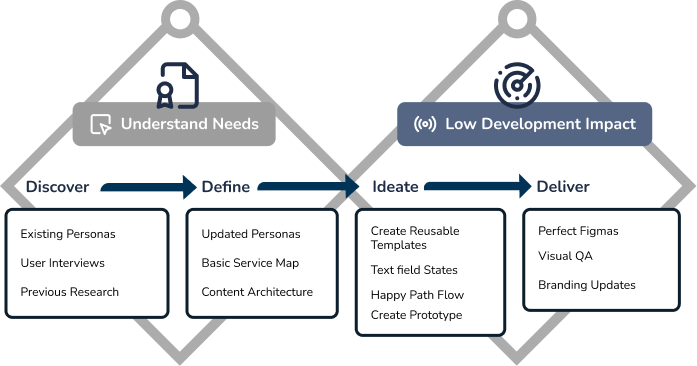
- Early stage project
- Small Developer resource assigned
- Lots of stakeholders involved
- 3 Update sessions per weeek
-
Overview
The Fixed Wireless Access (FWA) purchase workflow was fragmented across multiple systems and teams, creating friction and inconsistent user experiences. I unified the workflow into a single, scalable experience that improves clarity, reduces errors, and supports future product expansion.
- Launch steps lived across multiple systems and teams
- Requirements were inconsistent and difficult to track
- Handoffs between product, engineering, and fulfillment were unclear
- Launch cycles were slow, error‑prone, and hard to coordinate
Challenge
- Led design strategy and UX architecture for unified workflow
- Mapped end-to-end processes across all teams and systems
- Defined requirements and designed solutions for clarity and scalability
- Collaborated with product, engineering, and fulfillment stakeholders
My Role
ConstraintsThe FWA project had to be delivered with a smaller than usual development team, requiring careful prioritization and efficient design solutions. The release timeline was tight, necessitating rapid iteration and close collaboration with cross-functional teams to ensure a successful launch.Empathizing with users
Working with the product team I created a simple persona to guide our design decisions, this artifact didn't exist so this also involved educating the product team on the benefits of this approach.
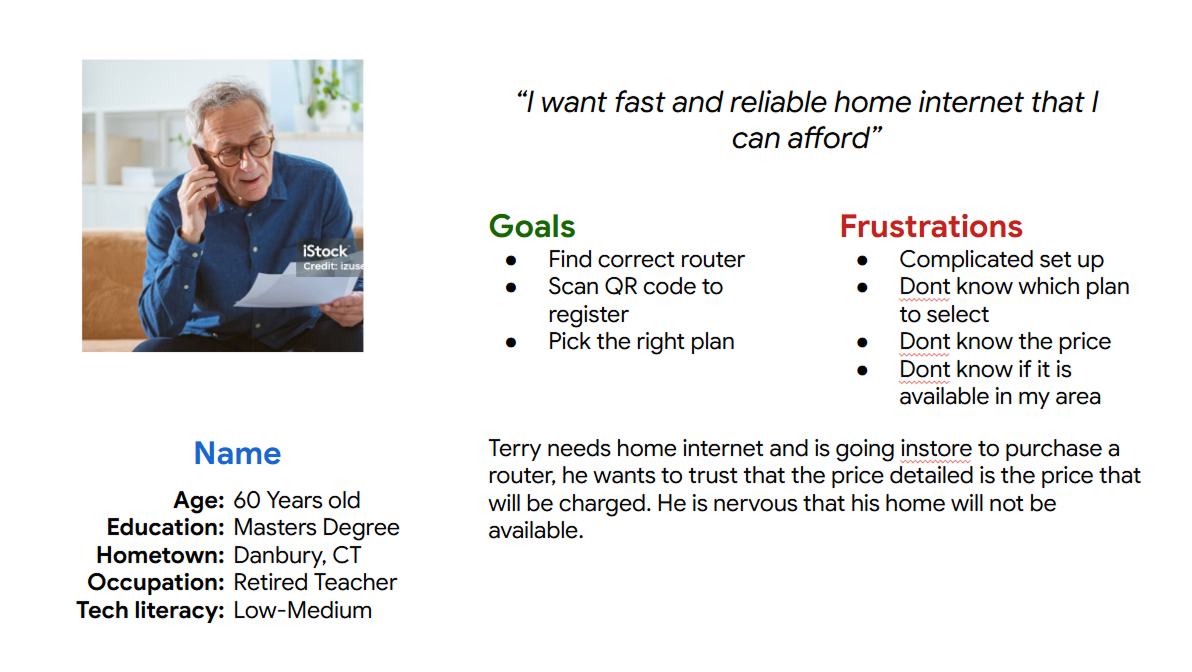
This persona was created to help the team empathize with the user and guide design decisions. - Create proto-personas based on discussions with the product owner
- Consider this user in design decisions
- Build empathy with goal user
 Design Strategy
Map the Flow
Working with the product owner I mapped the required workflow based on the business requirements. This would help us quickly move into the design phase and ensure we were aligned with the business goals.- Map the full user and operational journey
- Identify workflow friction and dependencies
- Identify stakeholders and develop relationships across teams
Design Strategy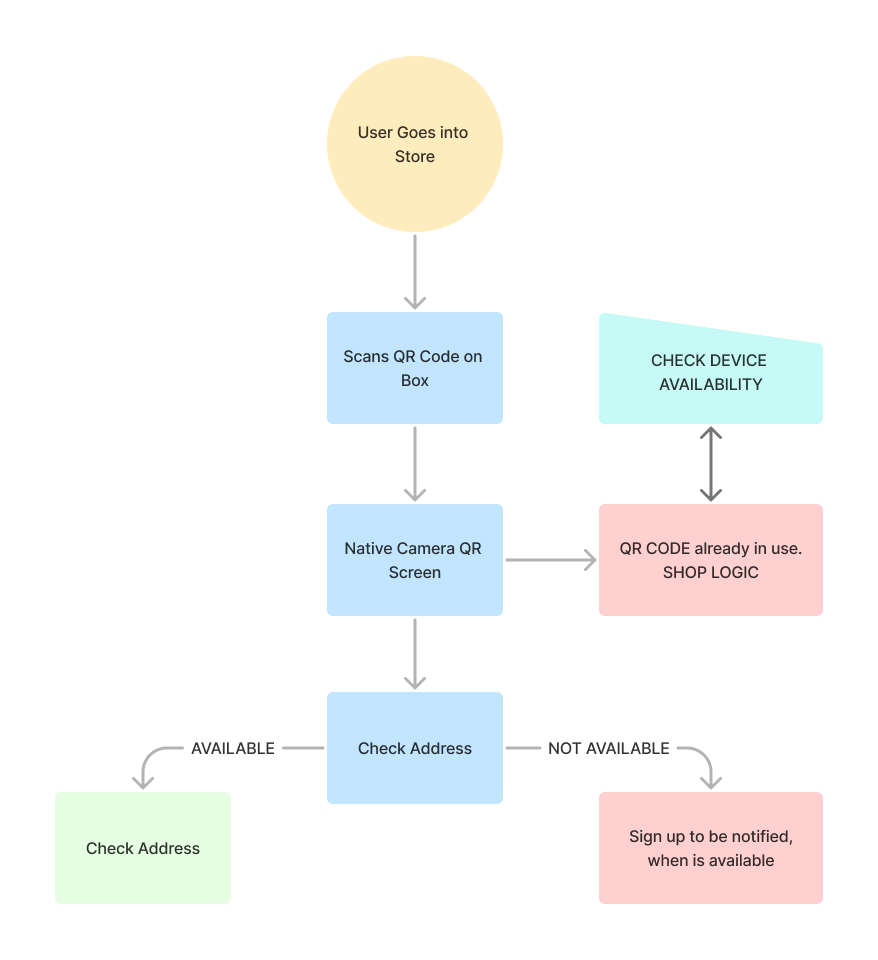
Simple flow map based on the business requirements. Reusable Principles
To ensure scalability, I established reusable patterns and components that reduce design debt and increase development velocity across future FWA enhancements.
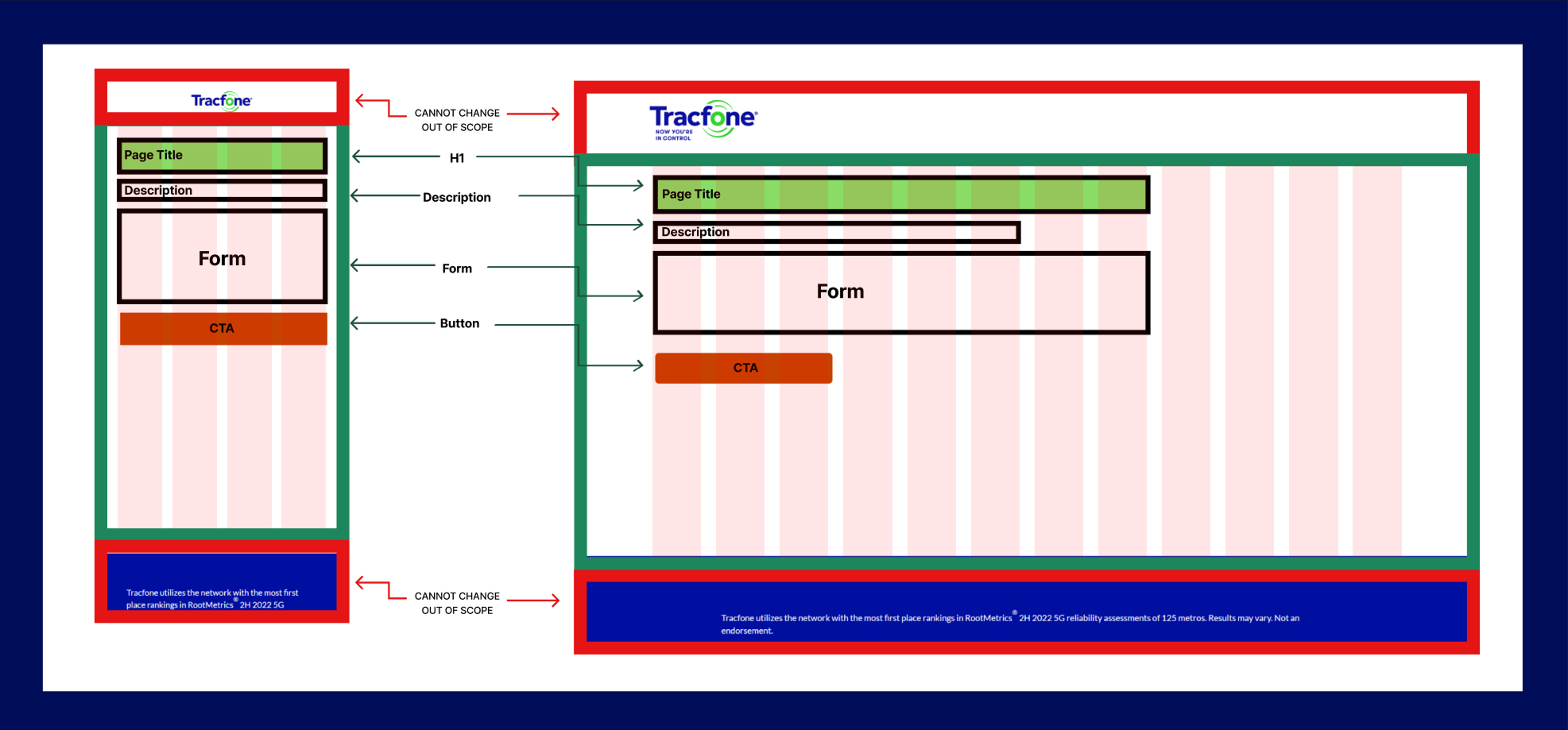
Simple reusable template can be reused across different flows. - Standardize reusable components
- Maintain visual and functional consistency
- Improve scalability for future product launches
Design StrategyTextfield States
Reusing standardized prototypes meant that the development team could implement textfield components more efficiently, ensuring consistency and reducing errors across the application.
- Consistent input styles
- Clear error and validation states
- Accessible labels for all user paths
Standardization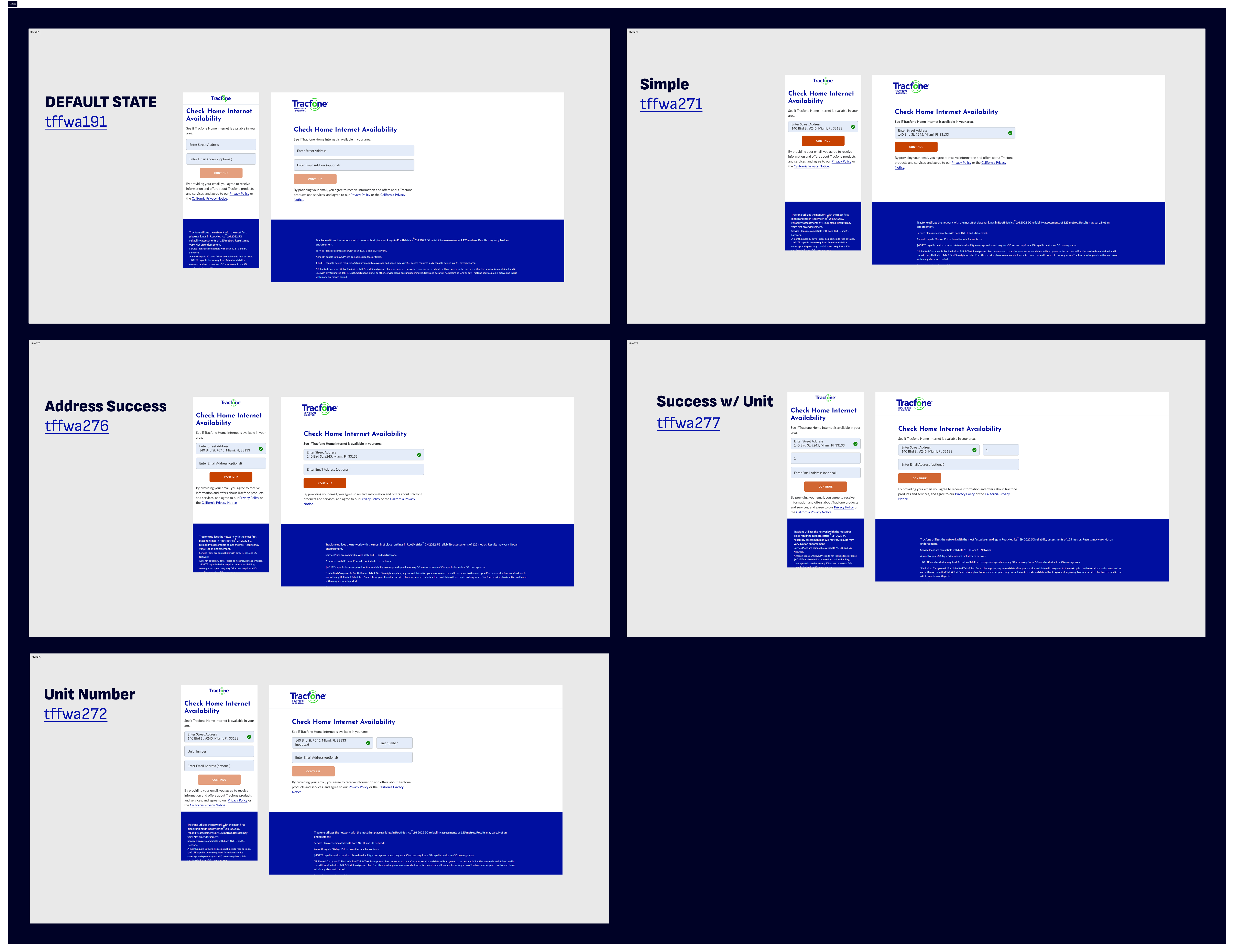
States of the textfield component. Happy path prototype
I created a guided “happy path” prototype that clarified the ideal workflow, reduced ambiguity for cross‑functional teams, and aligned engineering around a predictable implementation sequence.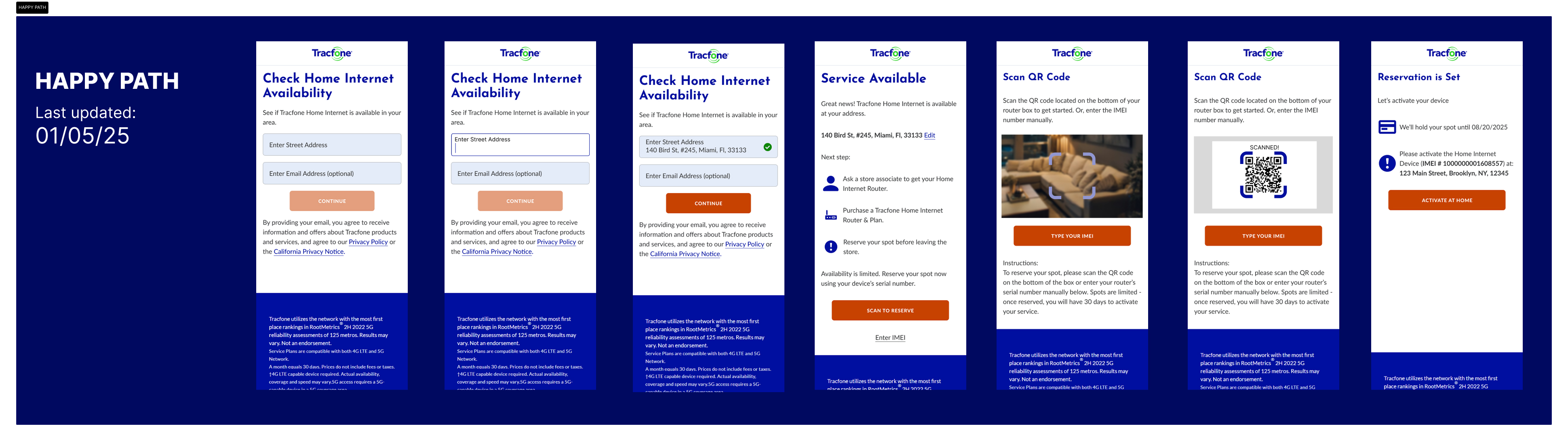 Validate the “Happy Path” early a focused prototype helped us validate the core flow quickly. It surfaced issues early, reduced rework, and aligned stakeholders on what “good” looked like.
- Keep prototype updated
- Shared workflow vision across teams
- Clear checkpoints for engineering and product
 Gain alignment
Cross-team collaboration
I partnered closely with product, engineering, and operations to ensure the unified workflow reflected real‑world constraints and could be implemented predictably across teams.- Shared documentation and workflow maps
- Regular cross‑functional syncs
- Collaborative design reviews to reduce ambiguity
Design Strategy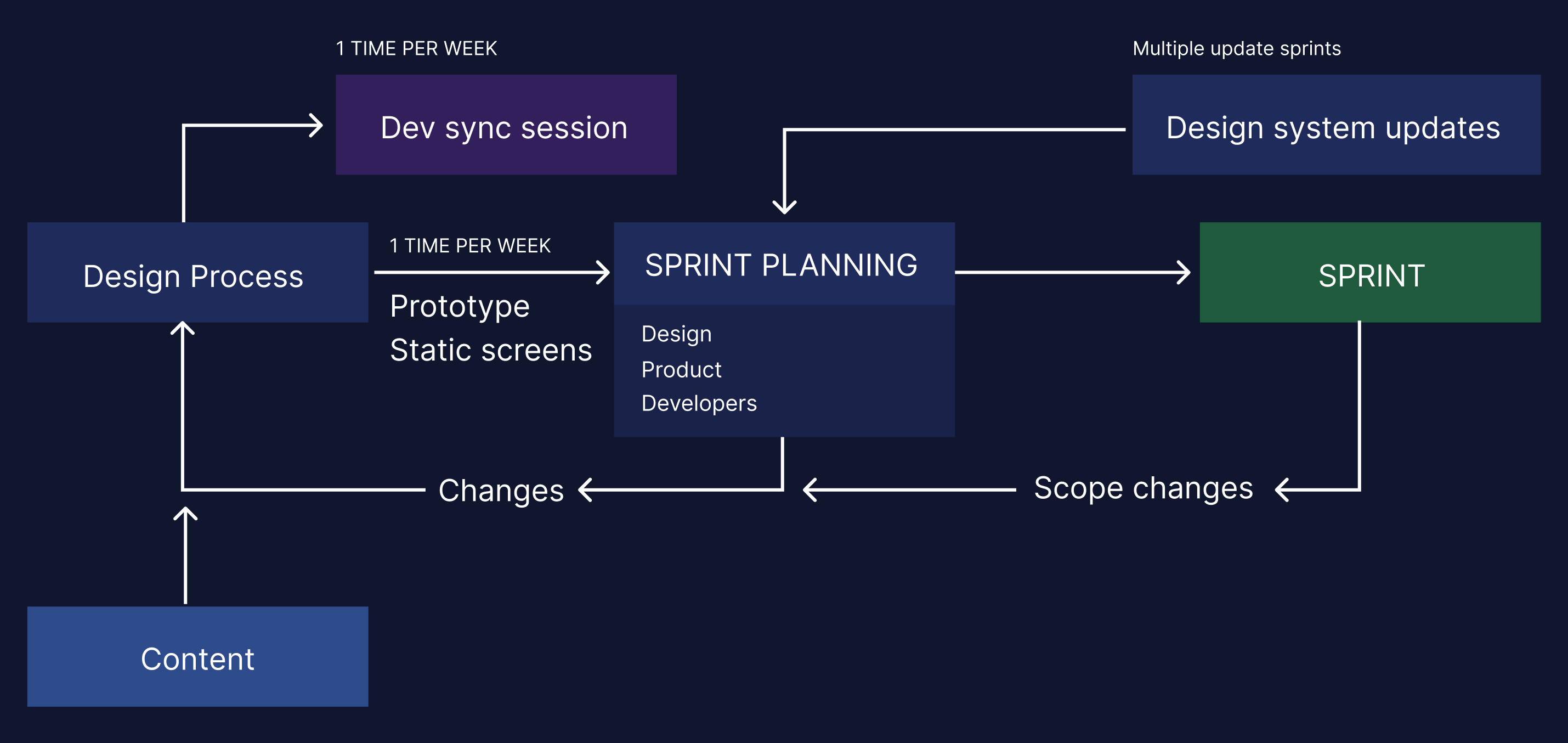
Basic idea of how I collaborated with cross-functional teams. Continuing Dev Support
I supported engineering through launch by maintaining design fidelity, updating components, and ensuring the unified workflow was implemented consistently across systems.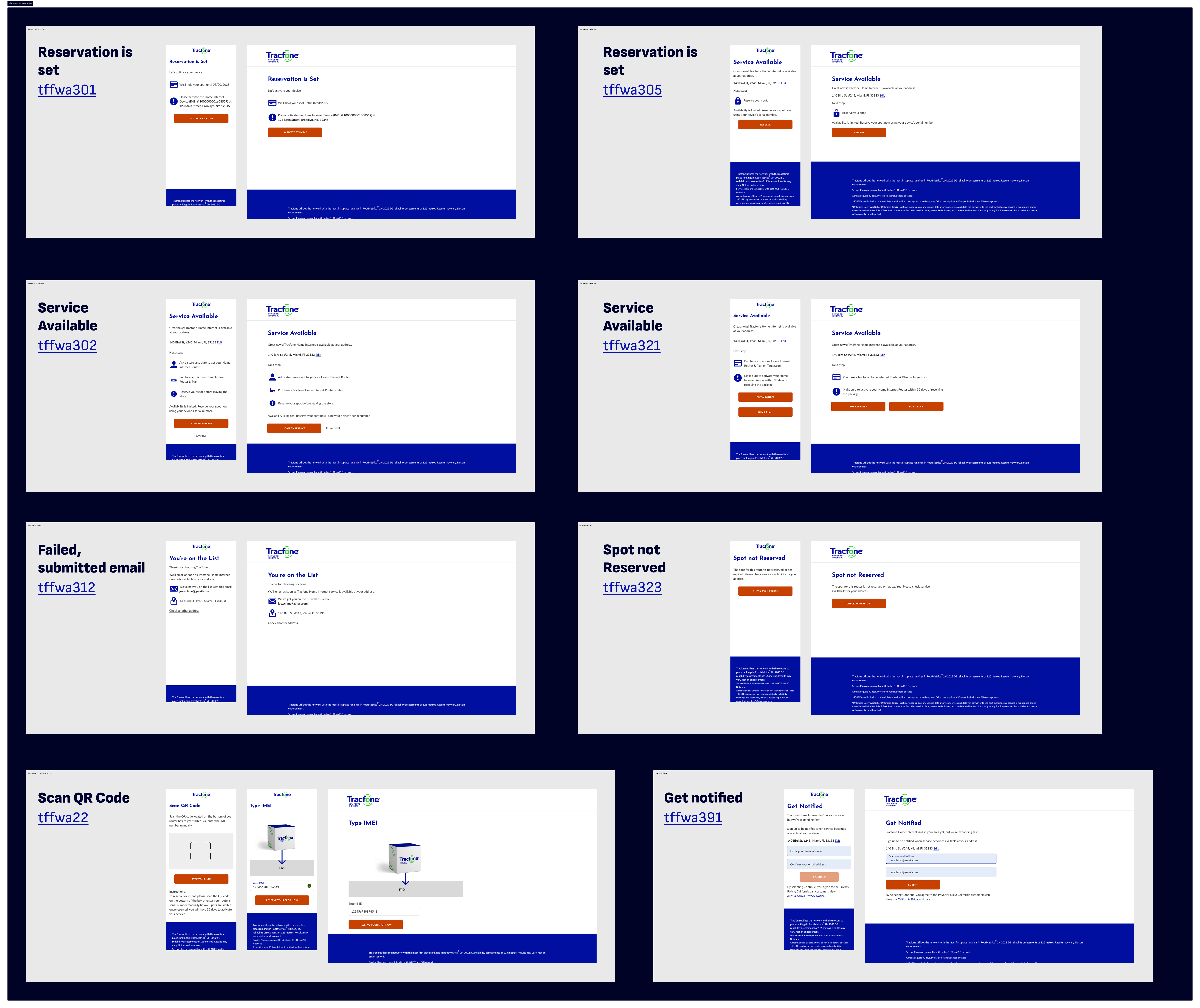
Example of some of the new screens required. - Component library updates
- Design QA for workflow accuracy
- Continuous feedback during implementation
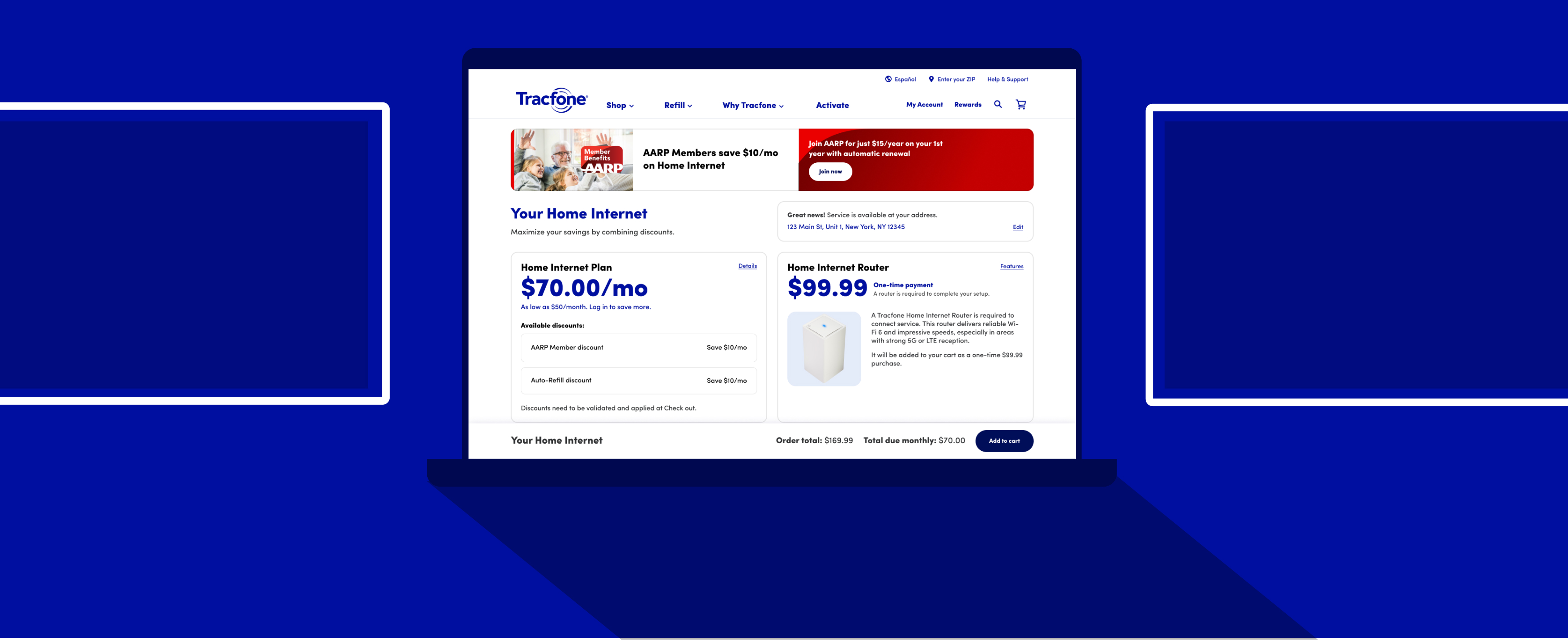
Supporting DevAfter launch, the FWA experience extended to online channels. I refreshed visual elements to align with Tracfone's updated brand and ensure cohesion across the workflow.
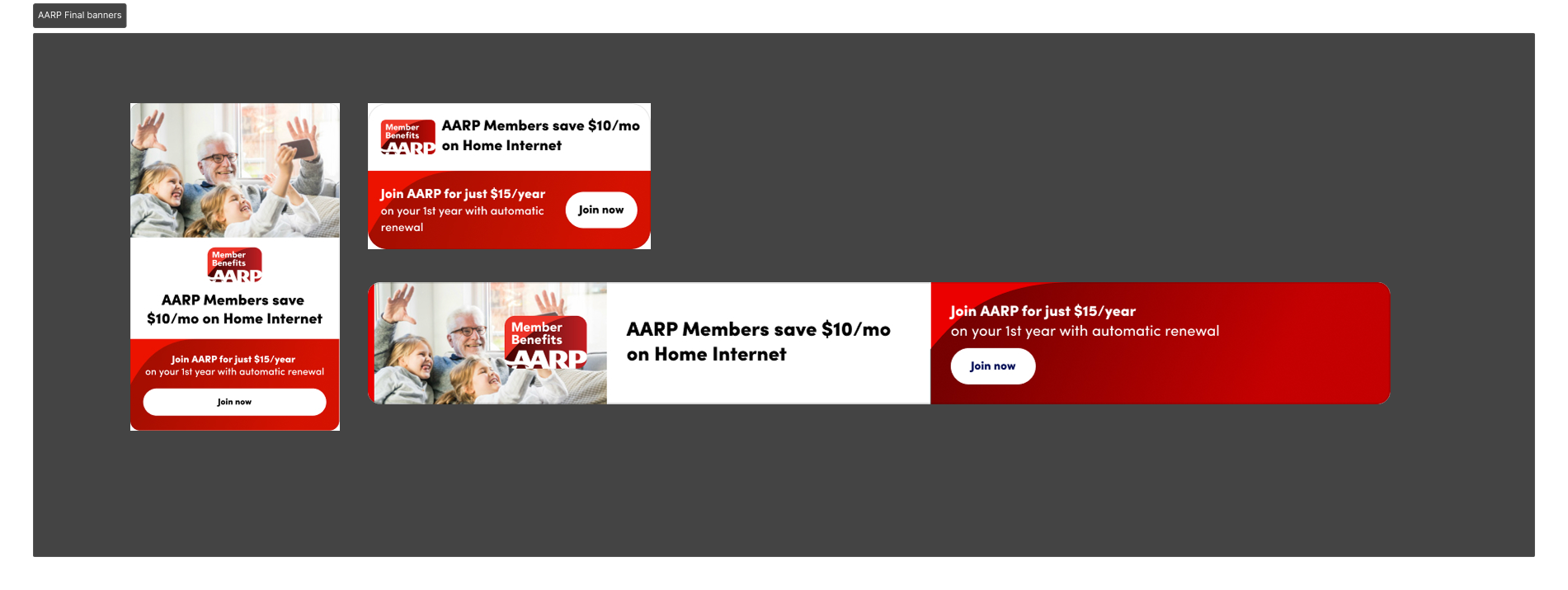
- Navigation added to global navigation and marketing pages. Partnered with AARP to promote the feature with fast-tracked prototypes.
- Plan: new pattern for checkout process with marketing element integration.
- Device: this required an entirely new page, would need to be a flexible, easy-to-update design.
Design Direction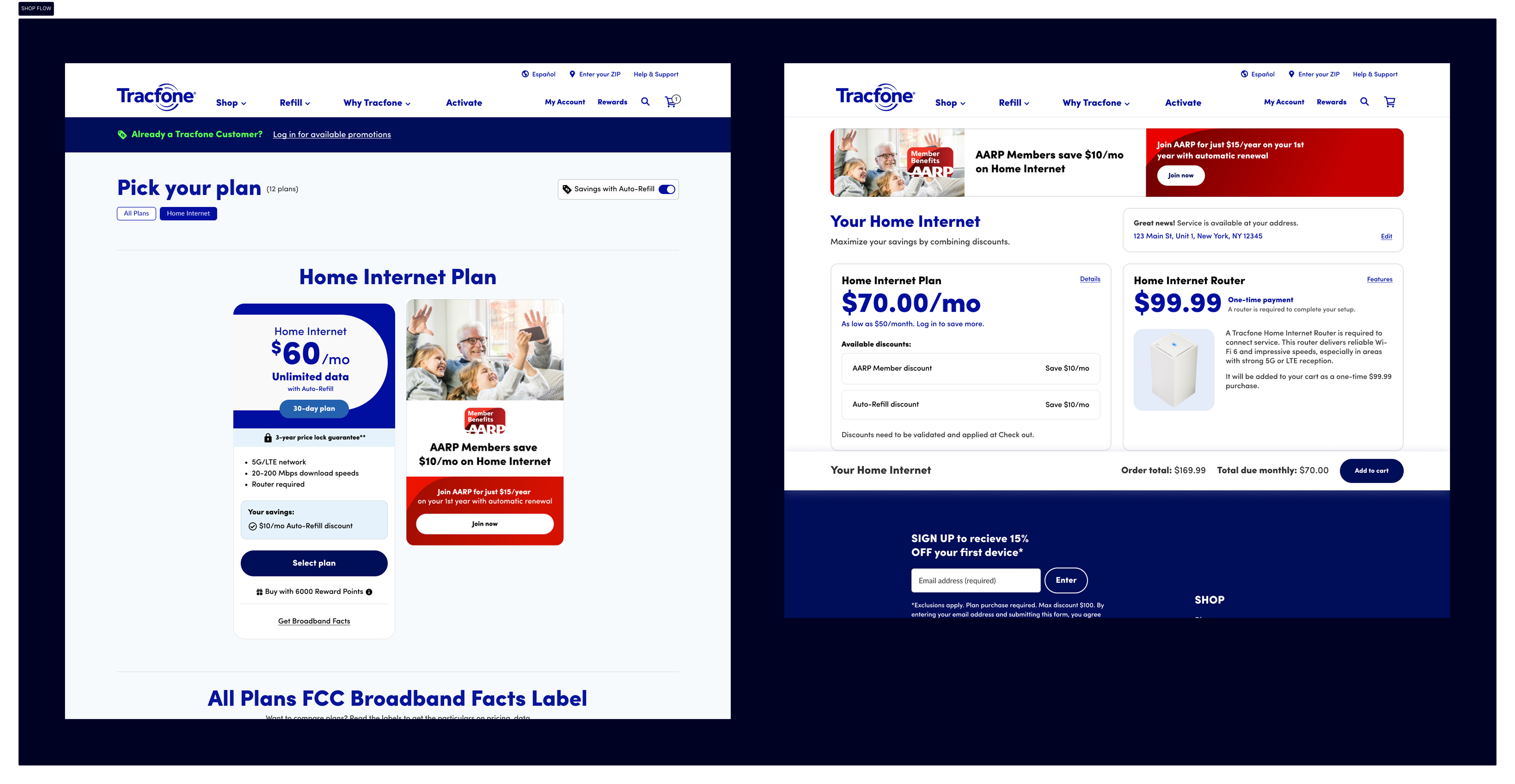
Originally, this content was a part of an ad campaign but as priorities shift it became clear we would need to create these assets.
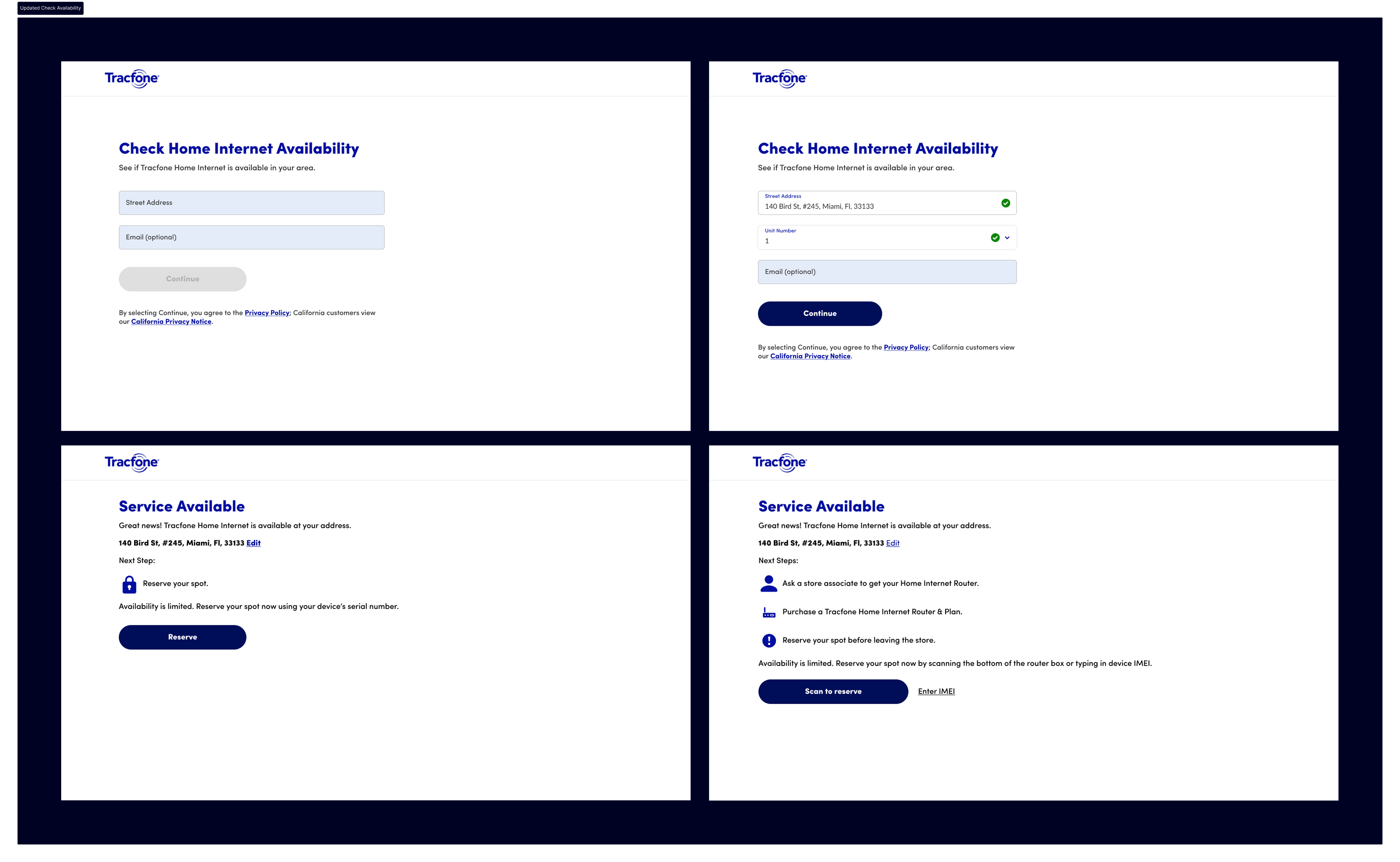
Branding Updates
I refreshed visual elements to align with Tracfone’s updated brand system and ensure a cohesive experience across the unified workflow.
Key Takeaways
The FWA project taught me the power of designing with reusable patterns and a scalable design system. By prioritizing mobile-first design and maintaining a single source of truth across the workflow, we reduced design iteration cycles and accelerated development handoffs. The unified experience across 62 stores proved that consistency drives both user satisfaction and business results.